Runway Paper / Culture / SEP 25, 2026
The Collapse of theFront Row
For a decade, the seating chart was the story. Then the shows got good again — and nobody looked up from the clothes.
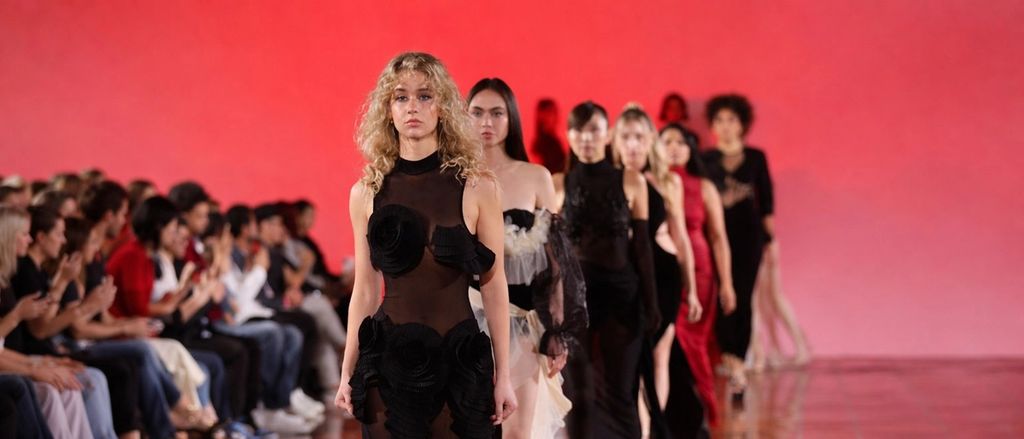
There was a stretch of years — you lived through it, you scrolled through it — when the most photographed thing at a fashion show was not on the runway. It was in the first row of chairs, holding a phone, wearing a borrowed look, seated according to a chart that had been negotiated harder than most licensing deals. The front row was the show. The runway was the excuse for the front row.
That era is ending, quietly and without a press release. Not because celebrities stopped coming — they haven't — but because the attention stopped following them. Watch what actually travels from a show now: the clothes. A finale walk. A single look, shot from the middle distance, reposted a hundred thousand times by people who could not tell you who sat where. The seating chart has been demoted from story to logistics.
How the front row became the main event
It's worth remembering that the front row was an invention, and a fairly recent one. For most of fashion history, the best seats at a show went to the people who could do something with what they saw: buyers who wrote orders, editors who shaped coverage, clients who paid for the clothes. The seat was a working position.
Then the shows became media events, and the seat became media inventory. If a photograph of an actress in your front row reached more people than a photograph of your best look, the rational move was to invest in the actress. Whole budgets migrated from the runway to the chairs — appearance fees, styling, travel, the small army of publicists required to get one famous person to sit still for eleven minutes. Street-style photography poured accelerant on it. For a while, the walk from the car to the venue generated more coverage than the collection.
None of this was irrational. It worked. That's the uncomfortable part. Renting fame was, for about a decade, the most efficient marketing a fashion brand could buy.
What changed
The economics of attention shifted underneath it. Three things happened more or less at once.
First, the audience stopped needing intermediaries. When shows went onto livestreams and clips went onto everyone’s feed within minutes, the public no longer experienced a collection through photographs of famous people reacting to it. They saw the clothes themselves, immediately, at full resolution. The celebrity-as-proxy lost its function.
Second, celebrity itself inflated. When every show has a front row full of famous faces, no single face moves the needle. Scarcity was the whole mechanism, and the industry spent it. A famous guest is now table stakes — noted, photographed, forgotten by Tuesday.
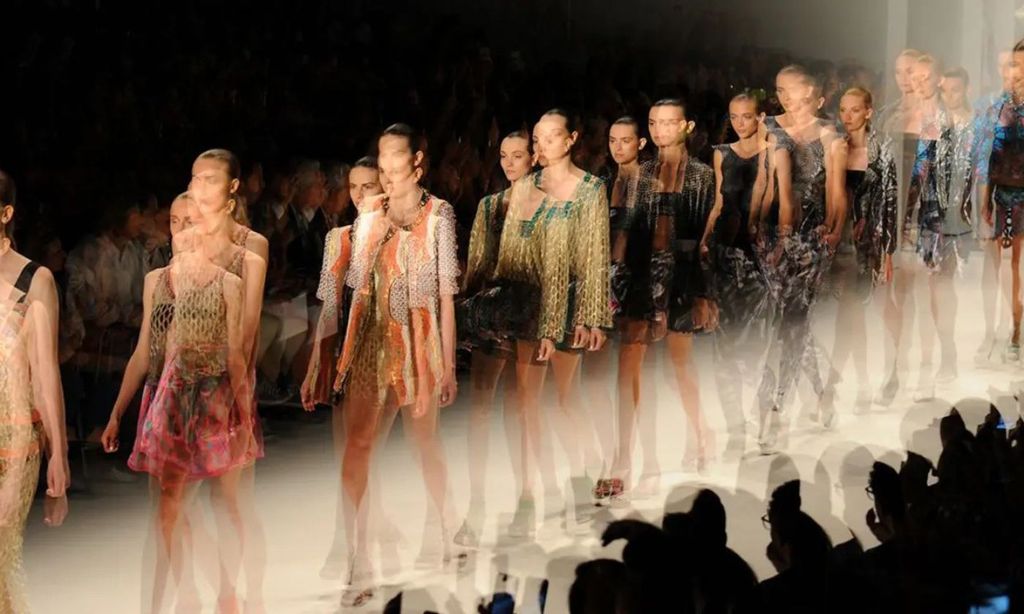
Third — and this is the one that matters — the clothes got louder. A generation of designers came up watching the front-row era and drew the obvious conclusion: if the work isn’t the story, someone else will be. So they built shows where the work is unskippable. Stronger silhouettes. Real scenography. Collections designed to survive being cropped into a vertical frame and watched without sound. The finale walk became the thumbnail. You cannot out-dress a thesis.
The signal to watch
Here's the tell that the shift is real: the most talked-about shows of recent seasons are increasingly the ones where nobody can name who attended. The coverage is look numbers, not guest lists. Meanwhile, the shows that still lead with their seating chart have started to read as compensating — if the loudest thing at your show is a guest, the quiet part is the collection.
This doesn't mean the front row is empty or that fame stopped mattering. Fame will always matter; fashion runs on it. What changed is the direction of the transaction. The front row used to lend credibility to the runway. Now the runway lends credibility to the front row — the seat is desirable because the work is good, not the other way around. That's not a small adjustment. That's the whole power structure turning to face the other direction.
What it means if you're building a brand
For emerging designers, this is the best news in twenty years, because it means the expensive part is optional.
You were never going to win the rented-fame game. The appearance fees, the seeding budgets, the celebrity stylist pipeline — that arms race was structured so that only incumbents could afford to compete. But the game that replaced it is won with things you actually control: the strength of the work, the clarity of the idea, and how well you present it on camera. A twelve-look collection shown beautifully to two hundred people — and shot properly for the several million who weren’t there — now outperforms a weak collection with a famous audience.
So spend accordingly. Put the money in the clothes and the craft of showing them: the casting, the light, the music, the thirty seconds of video that will represent the season forever. Invite people who will do something with what they see — buyers, editors, the photographers who actually love the work. If someone famous wants to come because they love the clothes, wonderful; that’s the version of celebrity that still converts, because it’s true.
The industry is rediscovering its oldest rule, the one it knew before the chairs got famous: the work is the marketing. Everything else is seating.