Runway Paper / Style / SEP 01, 2026
Court Dress: How Racquet Sports Took Overthe Sidewalk
The pleated skirt escaped the country club — a century of history, one pickleball boom, and three formulas for wearing regulation shapes with contraband intent.

The pleated tennis skirt has escaped. You can find it now at coffee counters, gallery openings, departure gates — everywhere except, statistically speaking, a tennis court. Somewhere between the pickleball boom and the quiet death of the dress code, racquet-club style stopped being a uniform and became a language. To speak it well, it helps to know where the vocabulary came from.
A century of borrowed whites
Court clothing has been leaking into fashion for a hundred years, and the leak has always run in the same direction: something built for movement gets adopted for meaning.
In the 1920s, René Lacoste got tired of playing tennis in the starched long-sleeved shirts the sport demanded, so he had a short-sleeved shirt made in breathable piqué cotton — and in 1933 started selling it with a crocodile stitched on the chest. The polo shirt has spent the century since drifting from equipment to emblem: country club, prep school, hip-hop, streetwear, and back again. Fred Perry ran the same play from Wimbledon in the fifties, and his laurel wreath ended up meaning a dozen different things to a dozen different subcultures, most of them nowhere near a baseline.
Even the scandals were about fashion. In 1949, Gertrude “Gussie” Moran showed up to Wimbledon in an outfit with visible lace trim — designed by Ted Tinling — and the resulting outrage made international news. The all-white rule that made it scandalous is still enforced at Wimbledon today, which tells you something important: racquet sports have always understood that clothes are half the event.
The point of the history is simple. None of this is athleisure. Court dressing was engineered for movement but finished like formalwear — crisp collars, stitched pleats, cable knits. Sportswear built by people who dressed for dinner. That double identity is exactly why the sidewalk keeps stealing it.
Why the takeover is happening now
Three currents converged. Pickleball became, by most counts, the fastest-growing sport in America, dragging millions of adults back onto courts and into court clothes — many of whom discovered the wardrobe is better than the sport. A decade of soft, logo-heavy athleisure produced a collective craving for structure: a pleat is a straight line in a world of jersey. And the dress codes that once policed these clothes — at the office, at dinner, at the club itself — quietly stopped being enforced, leaving the uniform available for reinterpretation.
The current wave isn't nostalgia, though. Nobody styling a tennis dress with platform shoes is trying to pass at the club. The pleasure is in the misuse.
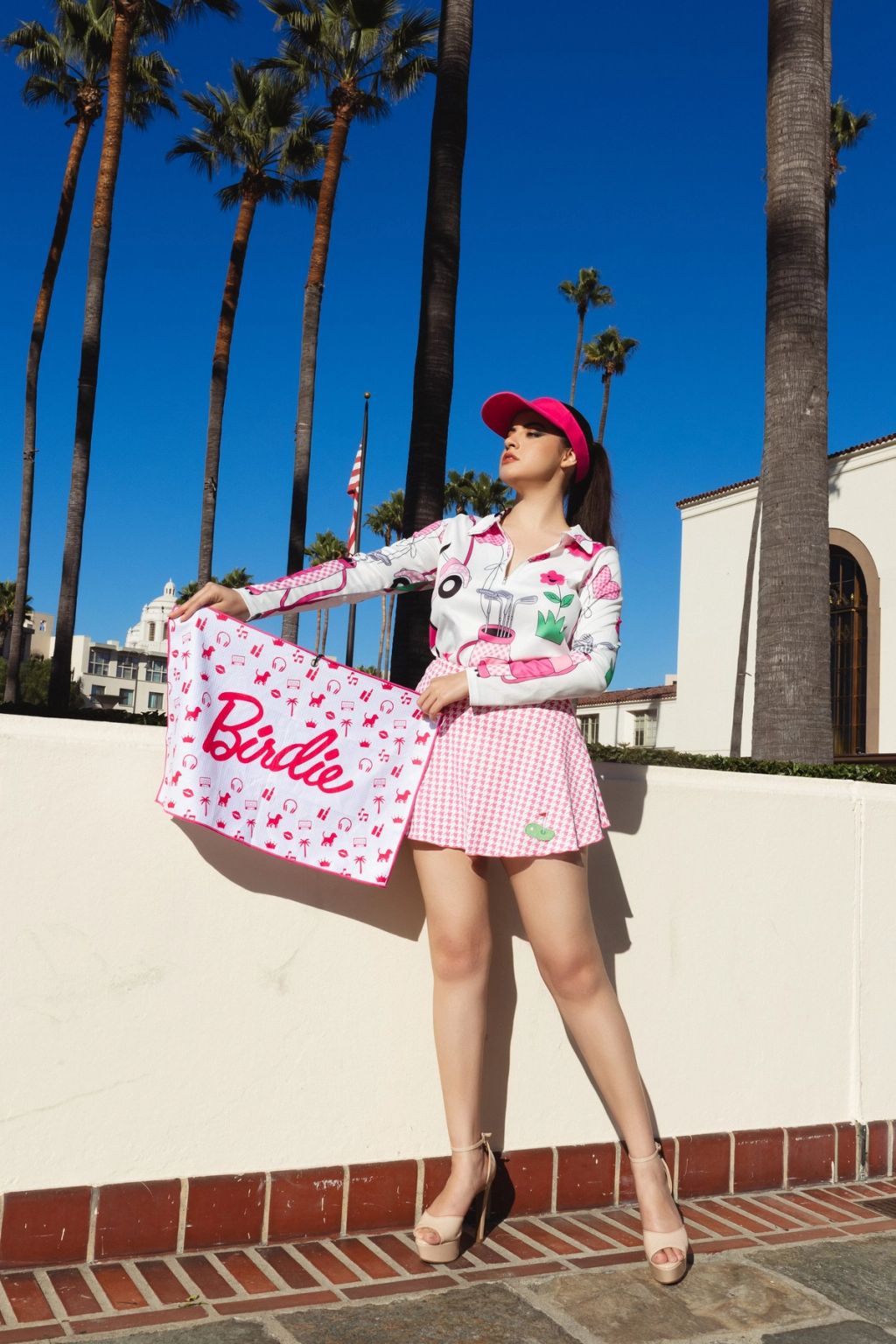
Three formulas that actually work
Our editorial “Court Order” was built on three styling rules, and they hold up off-set.
One: regulation shape, contraband color. Keep the silhouette exactly as the club intended — the pleated skirt, the fitted knit, the collared shirt — and break the palette. Barbie pink where white should be. Teal trim. The shape carries the reference; the color announces you know it's a costume. This is the single highest-leverage move in the whole system, because it works with pieces you may already own.
Two: one court piece per outfit. A pleated skirt with a leather jacket is styling. A pleated skirt with a polo, a visor, and a cable-knit sweater over the shoulders is cosplay. The court piece should be the quote in the sentence, not the whole sentence — everything else in the outfit should come from a different world entirely.
Three: swap the hardware. Footwear is where the look tips from athletic to fashion. Court shoes keep you on the court; platforms, loafers, or a heavy boot move the same skirt downtown. Same logic for the bag — a structured or printed bag against sportswear reads deliberate in a way a backpack never will.
Buying it once, correctly
If you're adding pieces rather than restyling what you own, the quality tells are unglamorous. In a pleated skirt, weight is everything: stitched-down pleats in a fabric with body will hold their line all day, while a featherweight version collapses into a ruffle by noon. In knits, cotton cables age into character; thin synthetic ones pill into regret. And in whites — the hardest color to buy — look for opacity and a clean hand, because court white is supposed to look crisp, not sheer.
The club lost custody of the wardrobe. Wear it like you won the case.