Runway Paper / Culture / AUG 18, 2026
What a Lookbook IsActually For
The most honest document in fashion isn't the runway show or the campaign — and if you're an emerging designer, it's the single highest-leverage thing you'll ever shoot. Here's how to do it right.
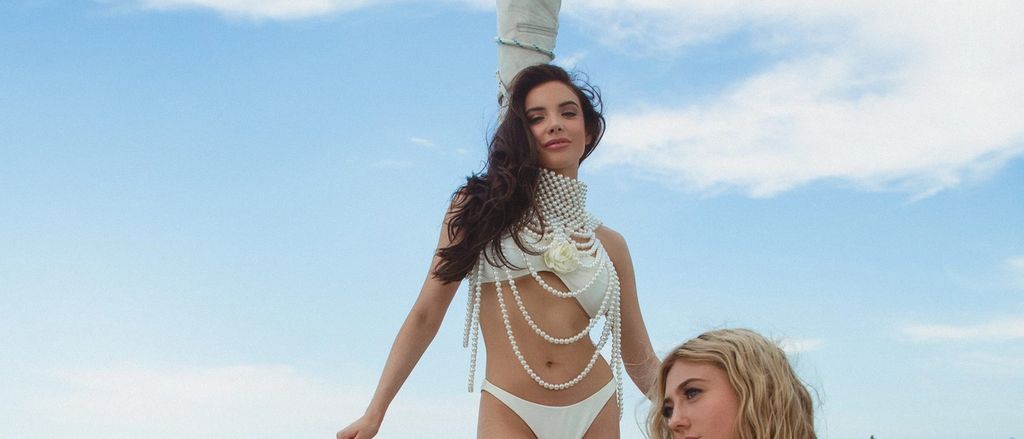
The runway show is theater. The campaign is advertising. The lookbook — that unglamorous stack of images every brand produces and almost nobody discusses — is the only document in fashion whose entire job is to tell the truth: here are the clothes, here is how they hang, here is what we meant.
That honesty is why we're building this magazine's editorial spine around the form. It's also why, if you're a designer without a marketing department, the lookbook deserves more of your budget and attention than almost anything else you make. Both halves of that argument below.
A tool that became a text
The lookbook didn't start as content. It started as commerce — the book a sales team put in front of buyers so an order could be written. Couture houses kept albums of the season's looks; showrooms assembled binders; the whole apparatus existed so that someone with a budget could see look 14, in sequence, clearly enough to buy it. The format's DNA is legibility: full look, head to toe, honest light, numbered.
Then the industry changed around it. Shows got more expensive to stage and easier to skip. Brands went direct-to-consumer and digital-first. Press coverage fragmented. Through all of it, the lookbook quietly went from supporting document to primary text — for many labels now, the only text. When a collection enters the world today, the lookbook usually is the entrance.
Which produces a strange situation: some of the most consequential image-making in fashion happens in a format designed to be flipped through by a buyer with a calculator, and almost nobody treats it as a craft. The brands that do treat it as one — that shoot lookbooks with a point of view while keeping the format’s honesty — get editorial-grade imagery and a sales tool for the same money.
Anatomy of a good one
Strip every great lookbook down and the same skeleton appears.
Full looks, fully visible. Head to toe, garment unobstructed. The moment cropping starts hiding hems and shoes, the document stops doing its job. Detail crops are a supplement, never a substitute.
Consistent light, consistent distance. The images are read in sequence, as a set — so the set has to hold. One location, one light quality, one rough camera distance. Consistency is what makes a lookbook feel authoritative; variety is what makes it feel like a camera roll.
A sequence that argues. Order is editorial. Open with the look that states the thesis, build the middle in coherent runs (by color, by fabric, by silhouette), close with the piece you want remembered. A collection has an argument; the sequence is where it gets made.
Credits and numbers. Look numbers, styling credits, fabric callouts where they matter. It reads as confidence. Mystery is for campaigns.
How to shoot one with almost no money
Here's the part most coverage skips, and the reason this piece exists. A credible lookbook is one of the few things in fashion where production value and budget genuinely decouple — because the format rewards discipline over spectacle.
One location, one light. A single wall with good window light beats three mediocre setups every time. North-facing window light is soft all day and costs nothing; an overcast afternoon is a free studio. What kills lookbooks isn’t cheapness — it’s inconsistency.
Do the shot-list math before the day. Looks × three frames (full front, full back or profile, one detail) = your minimum count. Divide by your daylight hours. If the math says ninety seconds per frame, cut looks — a tight fifteen-look book beats a ragged thirty every time.
One model or two, maximum. Fit the samples to the model in advance. A garment that fits cleanly on one model photographs better than the same garment approximated on four.
Steam everything. Then steam it again. The single most visible difference between amateur and professional lookbooks isn't the camera — it's pressing. Wrinkles are the one flaw no sequence can carry.
Resist the styling arms race. Over-propping and over-accessorizing is the most common failure mode, and it's fatal in this format: every added object subtracts attention from the garment the document exists to sell. If a stylist's choice would confuse a buyer writing an order, it doesn't belong.
Our policy, for the record
When we publish a photo essay in this magazine, we run it lookbook-style: full frames, in sequence, styling credited, the location doing honest work. No collage treatments, no mystery crops.
Fashion has enough theater. We're keeping the receipts.